Last Updated on June 16, 2026 by David
The restoration project at Corris presented a significant challenge: reviving the slate floor while safeguarding its intricate surface. Over the years, layers of wax, paint, cement, and lime had obscured the floor’s unique charm, which originates from the 1850s. The goals included not just the removal of these layers but also the preservation of the slate’s natural properties, the repair of open joints, and the attainment of a cleanable finish that retained the original texture.
Uncovering the Hidden Beauty of the Welsh Slate Floor After Years of Contamination in Corris
Recognising Residue on the Historic Slate Floor
When an old slate floor is covered with wax, paint splatters, cement stains, and lime deposits, its true condition can be misleadingly poor. This was apparent in the Corris residence, where the floor still held the allure of traditional slate, yet years of construction and prior treatments left visible blemishes on the tiles and joints.
The Welsh slate used in this property is rich in local history, as the house was constructed in the 1850s with stone sourced from the nearby Corris quarry. Its Welsh heritage, combined with impressive density, durability, and low porosity, has helped to preserve much of the original slate over time.
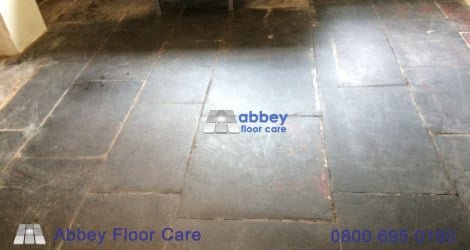
Corris’s geographical context is important, as the village’s architectural style has been significantly influenced by slate quarrying. The floor was not merely decorative; it played a crucial role in the structural integrity of the building. It consisted of older slabs intermixed with more recent additions, particularly surrounding the fireplace and a small kitchen extension, resulting in noticeable differences in level, texture, and wear patterns.
Evaluating the Impact of Red Wax and Previous Surface Treatments
The presence of red wax residue indicated that the floor had once featured a traditional finish, characterised by a warm mid-lustre appearance. This wax had not worn evenly, causing some areas to appear vibrant while others looked dull and patchy.
The historical importance of this wax application is significant. Regular maintenance had established a heritage appearance in certain areas, while others showed signs of wear and fatigue. The red Cardinal residue was not merely a modern coating issue; it was a vital element of the floor’s history, reflecting the finish that the homeowner cherished.
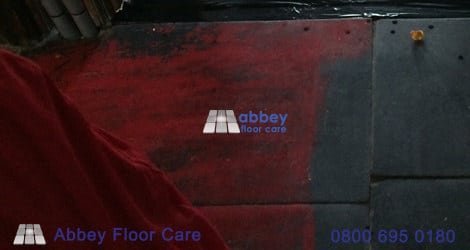
The homeowner sought to restore the original finish without transitioning to a standard modern surface. it was vital to maintain the floor’s appearance, surface character, and cleanability. A floor could regain its colour, but if the historic texture was lost during the process, it would lack authenticity.
How the House Layout Contributed to the Slate Floor’s Condition
Corris is located within the SY20 Machynlleth postcode area, renowned for its stone-built period cottages, terraced homes, and compact village houses that have often undergone modifications for kitchens, bathrooms, or additional living spaces. Slate floors are frequently found in porches, entrance halls, kitchens, dining areas, living rooms, and other ground-floor spaces that experience heavy foot traffic. Many of these layouts are practical and narrow, leading to the same slate pathway bearing traffic from various entry points, garden access, kitchen use, and daily family movement. Where older slate meets more recent finishes due to extensions or renovations, there can be noticeable variations in level, texture, and wear patterns.
The main challenge for slate floors in Corris homes arises from a combination of older stone structures, busy entrance routes, and damp outdoor transitions. These factors can drive grit, moisture, and soil deep into the worn surface textures and open grout lines. In family kitchens and along these pathways, slate can appear flat, patchy, and difficult to clean unless contaminants are removed and the floor is sealed correctly to match the original stone.
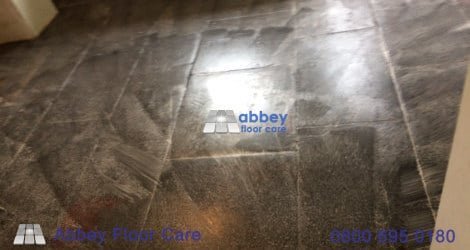
The mechanically split surface exhibited natural cleavage and a textured finish, making every mark more pronounced when light caught the ridges and troughs. This riven texture posed both a cleaning challenge and sealing consideration. While the texture enhances the character of slate, it also traps old residue in its uneven areas.
Understanding Why the Floor Appeared Worn Despite Its Structural Soundness
The homeowner’s challenge did not stem from the floor losing all value or identity. Rather, it resulted from residue being trapped within the slate tiles, loss of pointing between slabs, patchy coating build-up along edges, and a surface that no longer responded effectively to regular cleaning methods.
Residue accumulation at the edges resulted in uneven coatings, recessed areas, and excess topical residue, creating a varied appearance. Some sections looked darker while others appeared flatter. This combination made the floor seem tired, although the underlying slate still possessed significant historical character.
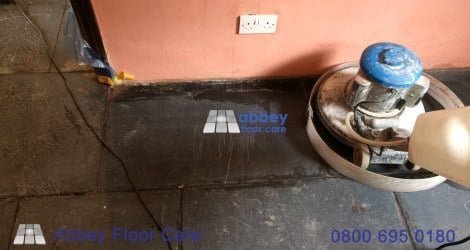
This initial condition illustrated why a standard slate cleaner, sponge mop, or mild detergent would not yield satisfactory results. While loose dirt can be removed with a dust mop, soft broom, and clean water, the ingrained wax, paint, and cement residues are embedded within the porous surface texture, necessitating professional restoration instead of relying on basic cleaning methods.
Examining the Reasons Behind the Slate Floor’s Worn Appearance Despite Its Structural Integrity
A slate floor can remain structurally sound, even when it appears neglected due to residue, dullness, and open grout lines. In this instance, the riven surface had trapped contaminants within its textures, while open joints allowed dirty water to settle, highlighting the need for targeted repairs.
Even structurally sound slate may seem worn when residue accumulates in the texture and grout gaps.
The open joints required slate pointing, as old pointing, missing joints, and the condition of the slate slabs can allow moisture to penetrate, influencing sealing decisions. A breathable and flexible product was selected as a matching filler, which was allowed to cure overnight to prevent the floor from being prone to rapid re-soiling.
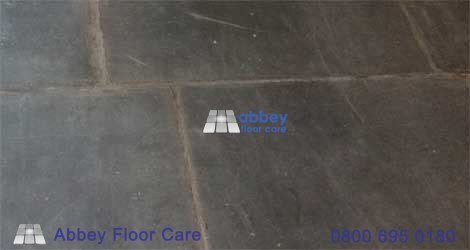
A faded slate appearance often results from residue, worn sealers, or surface wear rather than mere dirt. Concerns regarding colour changes are addressed in why some slate floors look faded while others stay vibrant, ensuring that this project remained focused on restoration rather than repetitive cleaning efforts.
Implementing Cleaning, Pressure Rinsing, and Slate Pointing While Safeguarding the Riven Surface from Quick Re-soiling
Rushing through a riven slate restoration may remove visible dirt but can leave dissolved residue ready to settle back into low points. A gel cleaner was chosen for significant build-up because its extended dwell time effectively broke down old sealers, wax, and problematic areas on the riven slate without the need for aggressive scrubbing.
The solvent-based stripper employed solvent action to assist in the removal of acrylic, wax, and coatings where old sealant removal was essential. Slate, being a fine-grained metamorphic rock, cleaves along natural planes. This layered structure restricts restoration to cleaning and sealing, making the surface sensitive to harsh cleaning agents.
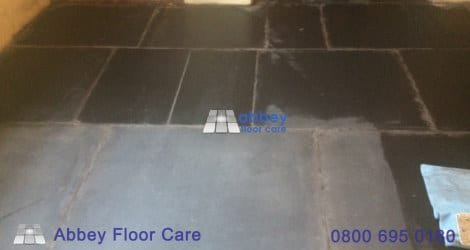
Wet vacuum recovery was utilised for slurry extraction, as removing riven surface residue required preventing redeposition. In practice, the wet vacuum and pressurised rinse effectively captured contamination, lifting dirty solutions from the floor instead of allowing them to spread through the grout and textured finish.
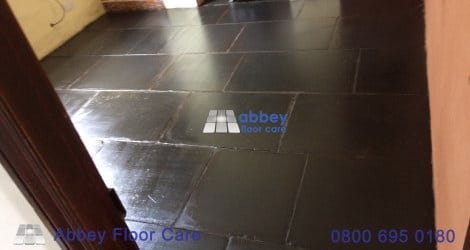
The final protection involved mineral activation, colour enhancement, impregnating protection, and a breathable barrier with a controlled surface sheen. Impregnating sealers maintain a natural finish, while topical sealers are applied where a colour-enhanced or low-sheen finish is desired. A finely honed slate floor has a smooth, consistent surface that diffuses light evenly; an impregnating sealer preserves the natural riven texture, while a topical sealer adds a subtle sheen.
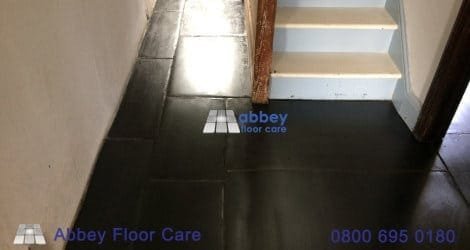
Proper ongoing maintenance is essential for keeping the restored slate cleaner. This includes removing grit before wet mopping and using a pH-neutral stone cleaner that does not leave a sticky residue. Avoid steam cleaning, as heat can soften protective layers and force moisture into textured areas. Practical care routines are discussed in how to clean slate floors when they remain dull, maintaining a separation between routine cleaning and this comprehensive restoration process.
Stunning Before and After: Transforming Slate Colours While Preserving Historic Character
Before the restoration, the slate colours were masked by layers of wax residue, cement stains, paint remnants, open grout lines, and sealant build-up. The floor appeared flat and visually fatigued due to coating accumulation, edge build-up, and recessed areas disrupting the natural colour variation.
<a href=”https://fabritec.org/victorian-tile-restoration-after-paint-spills/”>After the restoration</a>, the floor underwent a remarkable transformation. Mineral activation and pigment enhancement revived visual richness without compromising the original riven character. A professionally restored and properly sealed floor is considerably easier to maintain than one that is worn or improperly treated.
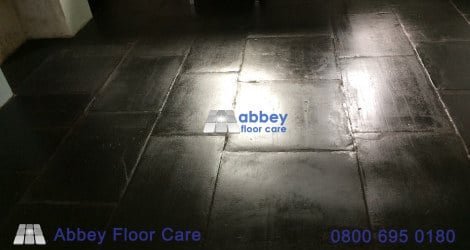
The completed kitchen celebrated its Welsh slate heritage, highlighting visible tooling marks and varied surface tones while achieving a protected satin finish. Consistent ongoing maintenance—utilising pH-neutral cleaning products, removing grit before wet mopping, and resealing at appropriate intervals—is crucial for extending the floor’s lifespan. The tailored maintenance handover included guidance on the correct slate floor cleaner and effective water testing methods.
Connecting the Corris Slate Restoration to Comprehensive Guidelines for Protecting Historic Slate Floors
This restoration project in Corris exemplifies how the revival of older slate floors aligns with broader care strategies for historic flooring. The case demonstrated that an ancient floor can regain its clarity and become easier to maintain when cleaning, local joint repairs, and sealing are approached as a cohesive restoration process rather than isolated quick fixes.
David Allen’s 25 years of expertise in stone restoration ensured a focus on the floor’s origins, riven texture, and aged joints, avoiding any inappropriate alterations to the surface. This expertise applies to various natural slate types, including Vermont Slate. Testing confirms that effective residue removal clears contamination from the surface. Clean water rinsing eliminates loosened soils, and sealants provide protection for the cleaned slate. The ideal protective sealant corresponds to the floor’s absorption characteristics.
The Corris floor now serves as a valuable example in broader material guidance, illustrating how Welsh slate, slate pointing, breathable protection, and long-term maintenance work synergistically on an aged floor. Additional care considerations are discussed in slate floors in UK homes, and this case study provides tangible evidence supporting that guidance.
Essential Products Used in This Slate Restoration Guide

David Allen — Abbey Floor Care
David Allen has specialised in restoring slate floors across the UK for over 30 years with Abbey Floor Care. His work on the Corris project addressed old wax, paint, cement, lime residue, and missing grout on a floor from the 1850s. David emphasises meticulous diagnosis, controlled residue removal, and a suitable protection sequence, ensuring that historic slate retains its character while becoming easier to maintain.
The article Slate Floor Cleaning Saved A Sound Corris Floor first appeared on https://www.abbeyfloorcare.co.uk
The Article Slate Floor Cleaning Revived a Stunning Corris Floor appeared first on https://fabritec.org
The Article Slate Floor Cleaning Transforms a Stunning Corris Floor Was Found On https://limitsofstrategy.com
The Article Slate Floor Cleaning Transforms a Breathtaking Corris Space found first on https://electroquench.com